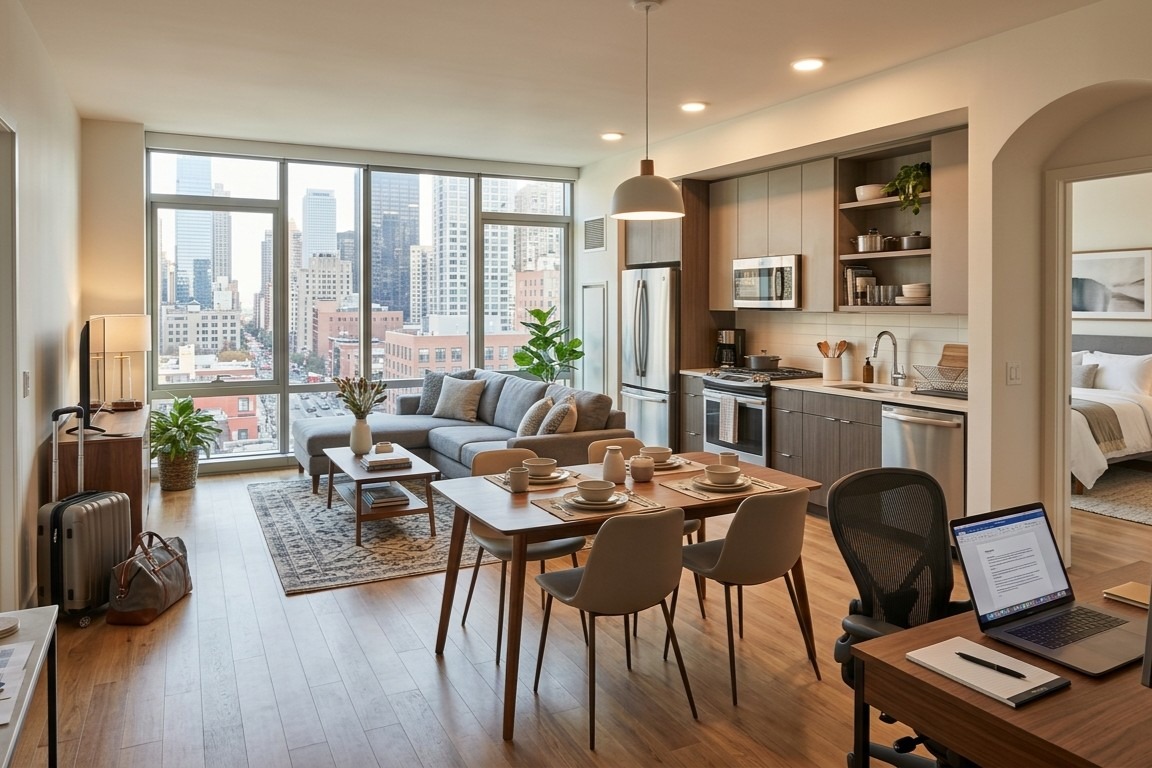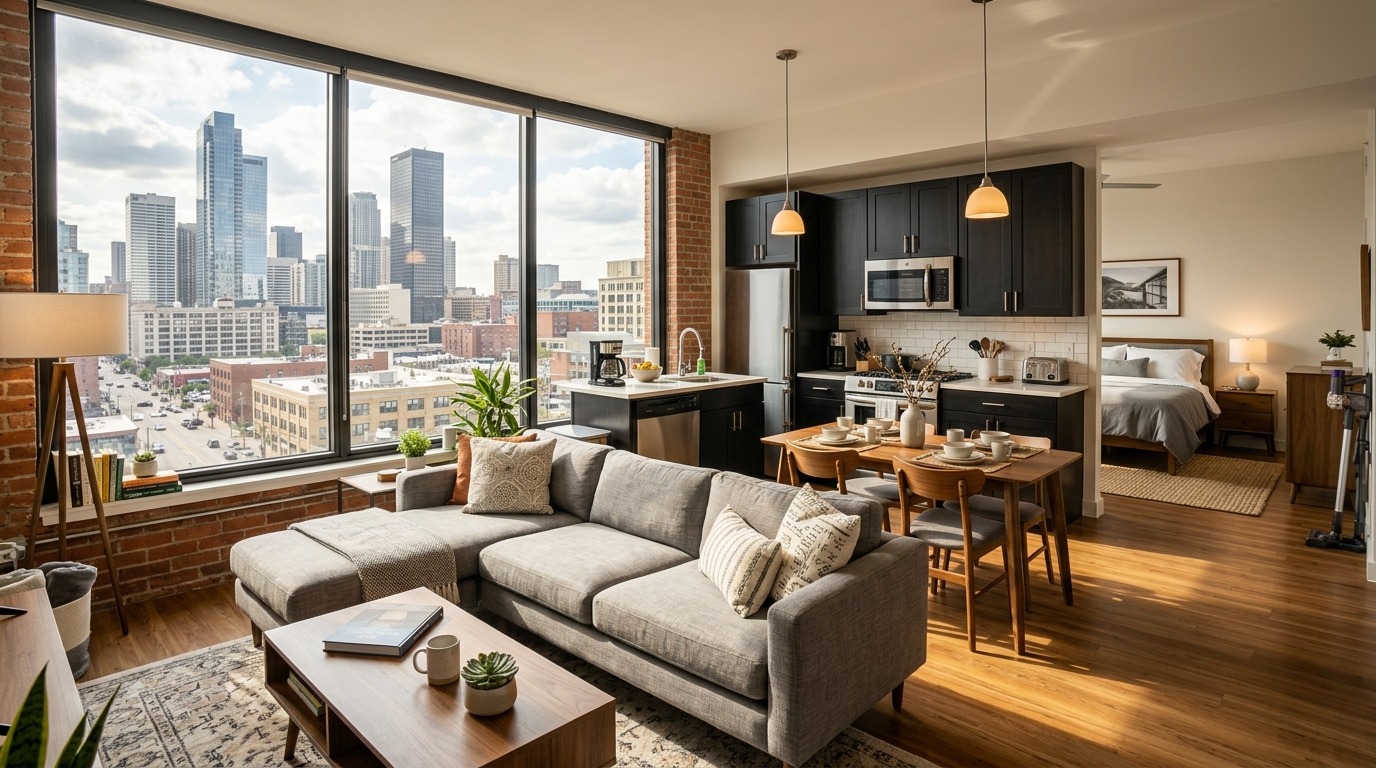
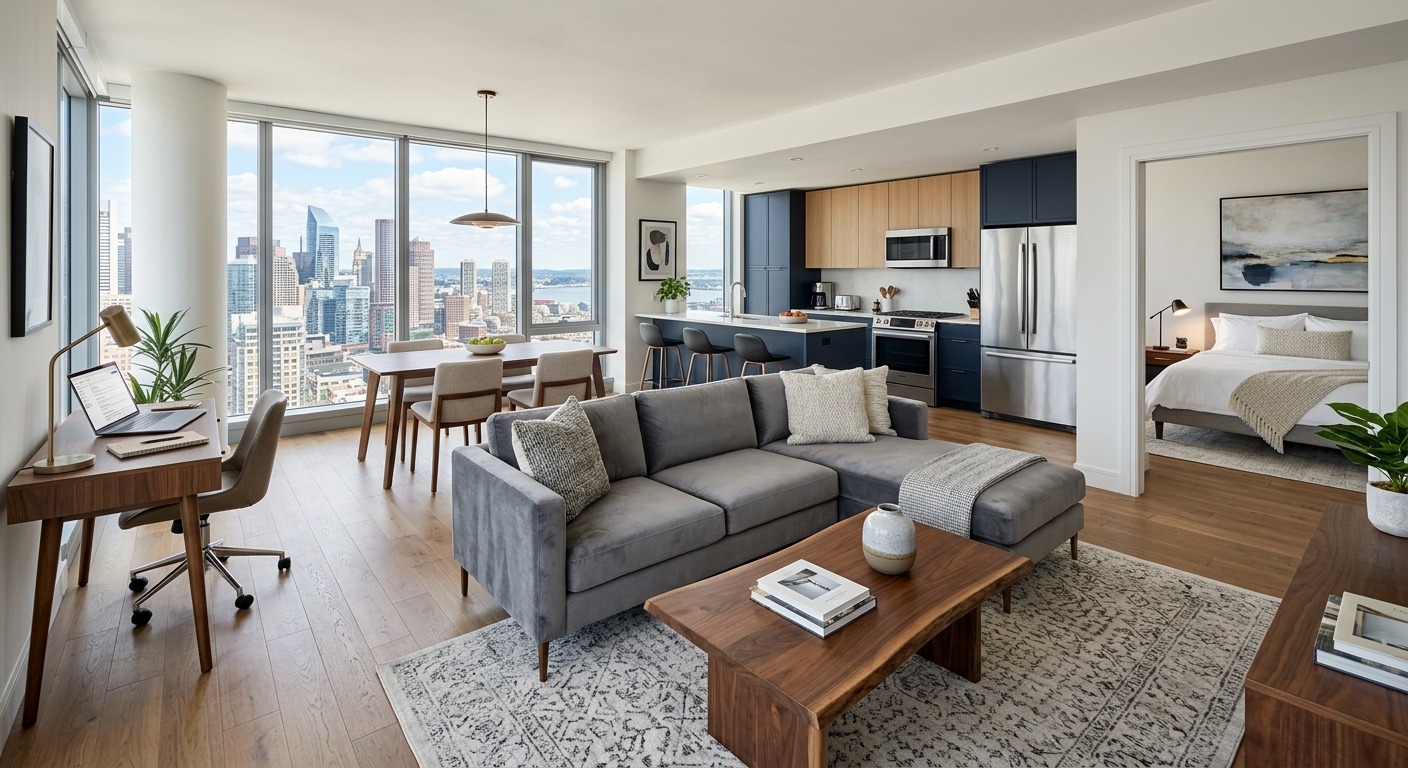
Corporate housing is fully furnished, temporary residential accommodation designed for business travelers, relocating employees, and project teams who need a place to live, not just a place to sleep, for weeks or months at a time. It functions as a hybrid between an apartment and a hotel: the space and independence of a real home, paired with some of the booking convenience and support guests expect from hospitality.
Companies are leaning into this model at a growing rate. The global corporate housing market reached $20.7 billion in 2024 and is projected to keep expanding through the decade, driven largely by businesses seeking more cost-effective and comfortable options for extended assignments. The reason is straightforward: once a stay runs past a week or two, a hotel room starts working against the traveler instead of for them.
This guide covers how corporate housing apartments actually function in real business travel scenarios, from booking and lease terms to what is typically included and how the costs compare with hotel billing.

What Is Corporate Housing?
It is a fully furnished, move-in-ready apartment or unit leased on a temporary basis, typically for business purposes rather than vacation travel. It is best understood as a hybrid service model: residential in layout and feel, but managed with hotel-style booking, support, and sometimes housekeeping built in.
Three characteristics define the category:
- Move-in ready units. Furniture, kitchenware, linens, and utilities are already in place, so there is nothing to set up on arrival.
- Mid-to-long-term availability. Most corporate housing is built for stays measured in weeks or months rather than nights.
- Business-oriented leasing structure. Contracts are written for corporate use, often billed directly to a company rather than an individual traveler.
The typical users reflect that structure: relocating employees settling into a new city, consultants on multi-month assignments, project teams working a single job site, and traveling executives who need a stable base for an extended stretch. Anyone evaluating furnished apartment options for an extended stay will find that corporate housing sits at the more business-focused end of that same furnished-living category.
How Does Corporate Housing Work?
How does corporate housing work in practice, from the first request to the final invoice? It works differently from a standard hotel or apartment booking at almost every stage, from who initiates the reservation to how the final invoice gets paid. Understanding each stage makes it much easier to know what to expect before committing to a lease.

Booking and Approval Process
How does corporate housing work at the booking stage? It usually starts with a company agreement rather than an individual reservation made on the spot. Many employers maintain standing relationships with corporate housing providers, which streamlines pricing and availability for repeat business travel across the organization.
A typical corporate housing booking moves through these steps:
- The need is identified. A project assignment, relocation, or extended business trip is approved internally, and an estimated stay length is set.
- A travel manager, HR contact, or relocation agency requests availability. This step is usually handled on the employee's behalf rather than by the traveler directly, which is one of the clearest differences from a hotel booking.
- The provider confirms unit options and lease terms. Pricing, location, and unit size are matched to the assignment's needs and budget.
- The lease is signed and billed to the company. Once confirmed, the corporate housing apartment is move-in ready for the employee's arrival date.
Advance reservations are standard for relocations and known project timelines, though many providers also accommodate shorter-notice requests when units are available.
Lease Terms and Flexibility
Corporate housing is usually leased in fixed terms, commonly 30, 60, or 90 days, with the option to extend if a project or assignment runs longer than planned. This is a fundamentally different billing model from a hotel's nightly rate, which resets and re-prices every single night, often climbing during peak travel seasons regardless of how long the guest stays.
Extensions are generally straightforward to arrange when notice is given ahead of the lease end date. Companies managing teams on rolling assignments benefit from this flexibility, since project timelines rarely match a calendar exactly. A consultant originally booked for 60 days who learns the engagement will run another month typically only needs to notify the provider, rather than rebooking from scratch, the way a hotel guest would need to extend a reservation that has already sold out.

What Comes Included in Corporate Housing Apartments
Corporate housing apartments are furnished for actual living, not just an overnight stay. A typical unit includes the following:
- Furnished interiors covering the bedroom, living room, and often a dedicated workspace for remote work or video calls
- A fully equipped kitchen with appliances, cookware, and dishware suited for regular cooking rather than reheating takeout
- Utilities bundled into the rate, commonly electricity, water, internet, and sometimes cable
- Laundry facilities, either in-unit or available on-site within the building
- Scheduled housekeeping, usually weekly or biweekly, rather than the daily service hotels provide
That last point matters in practice. Guests who want a hotel's daily housekeeping should know that corporate housing options offer this frequency for privacy and a more residential rhythm.
Billing and Payment Structure
Corporate housing apartments are typically invoiced directly to the company rather than expensed by the individual traveler. This single change removes a substantial amount of administrative friction compared with hotel stays, where employees often front costs and file for reimbursement afterward, then wait weeks for the company to process the paperwork.
Pricing for longer stays is also structured differently. A typical two-week hotel stay can cost about the same as a full month in a furnished corporate housing apartment. That gap widens further once meal savings from having a real kitchen are factored into the total. Companies comparing furnished apartment amenities across providers often find that the inclusions, not just the headline rate, determine the real monthly cost difference.

Corporate Housing Apartments vs Hotels for Business Travel
Once the basics of corporate housing are clear, the comparison with hotels comes down to three practical factors: usable space, total cost over time, and how each option fits into daily working life.
| Factor | Hotel | Corporate Housing |
| Billing model | Nightly rate, resets daily | Flat monthly rate |
| Typical stay length | 2-4 nights | Around 83 days on average |
| Kitchen access | Minibar or none | Fully equipped kitchen |
| Workspace | Shared with a bed and a TV | Separate, dedicated area |
| Housekeeping | Daily | Weekly or biweekly |
| Best suited for | Short trips, single meetings | Relocations, multi-week projects, teams |
Space and Productivity
A hotel room offers a desk crammed into the same space as the bed and the television. Corporate housing apartments provide a dedicated workspace separate from the sleeping area, which matters considerably for employees taking calls, joining video meetings, or working full days from the unit.
Multi-room layouts also support comfort over longer assignments. Having a living room separate from the bedroom turns a six-week stay from a confined arrangement into something closer to an actual home base.
Cost Efficiency for Extended Stays
Corporate housing's flat monthly rate consistently undercuts a hotel's nightly rate once a stay crosses the 30-day mark. Industry pricing comparisons put extended-stay hotel rates at roughly $150 to $250 per night, which adds up to $4,500 to $7,500 monthly before taxes and fees, while corporate housing providers report average monthly costs between $3,000 and $5,000 for comparable units.
Kitchen access compounds those savings. Employees who cook even some of their meals instead of relying on restaurants or room service can cut food costs by a meaningful margin over a multi-week stay, an expense category that hotels have no way to offset.
Lifestyle and Daily Living Experience
Hotels keep guests dependent on hotel services for nearly everything: meals, laundry, and daily room access. Corporate housing shifts that dependency toward a home-like routine, where the traveler controls their own schedule and space.
This distinction becomes especially relevant during long project cycles or relocation transitions, when an employee is essentially living in a new city rather than just visiting it.
Key Advantages of Corporate Housing for Business Travel
The advantages tend to show up consistently across teams using it for extended assignments:
- Predictable monthly budgeting for finance teams managing multiple traveling employees at once
- Higher comfort for employees on long assignments who need a stable, private base rather than a transient room
- Better work-life balance compared with hotel living, since a separate living space supports genuine downtime
- Reduced fatigue from extended hotel stays, where confined spaces and constant service interruptions wear on travelers over time
- Ability to accommodate teams or families, since multi-bedroom units exist for situations a single hotel room cannot support
What Corporate Housing Means for a Business Travel Strategy
For companies managing relocations, project teams, or any assignment running longer than a couple of weeks, that structure tends to outperform a hotel on cost, comfort, and employee satisfaction at the same time.
The practical takeaway for any travel manager or relocating employee comparing options is this: the longer the stay, the more decisively corporate housing wins on both budget and daily quality of life. A hotel remains the right call for a two-night trip. Past that point, the calculation shifts, and corporate housing apartments become the more sensible choice for nearly every stakeholder involved, from the finance team approving the budget to the employee actually living in the space.
Explore fully furnished corporate housing apartments at Global Luxury Suites in top U.S. cities, with utilities, a complete kitchen, and 24/7 guest support included in every stay.
Frequently Asked Questions
Is corporate housing cheaper than hotels for long business trips?
Yes, in most cases. Once a stay extends past roughly 30 days, corporate housing's flat monthly rate typically beats a hotel's accumulated nightly cost, especially once meals, parking, and other hotel add-ons are factored in. A two-week hotel stay can cost about the same as a full month of corporate housing in many markets.
Are utilities always included in corporate housing apartments?
Most corporate housing apartments bundle utilities such as electricity, water, and internet into the monthly rate, but this is not universal across every provider. It is worth confirming exactly what is included before signing a lease, particularly for stays where heavy utility usage, like running air conditioning constantly, could affect the total cost.
What is the minimum stay requirement for corporate housing?
Minimum stays commonly start around 30 days, though this varies by provider and market. Some operators accommodate shorter stays for an additional fee, while others are built specifically around 60- or 90-day terms for relocations and longer project assignments.
How secure are corporate housing apartments compared to hotels?
Corporate housing apartments in managed buildings typically offer security comparable to or better than hotels, including secure building access, on-site staff, and professional property management. Hotels offer round-the-clock front desk presence, which some travelers find reassuring, but apartment buildings with controlled access and 24/7 support provide a similar level of practical security.
Can corporate housing be used for remote or hybrid work setups?
Yes, corporate housing is increasingly used for exactly this purpose. The dedicated workspace, reliable high-speed internet, and quiet, separate living areas make it well-suited for employees working remotely for an extended stretch in a different city, whether for a single project or a longer hybrid arrangement.